


Ticket to Ride®
4.1777.00 Reviews
App Specs
- Version
- 1.11.0
- Updated On
- License
- $4.99
- Downloads
- 50,000+
- Developer
- Marmalade Game Studio
- Categories
- Board
- Platform
- Android
Screenshots
 Analysis by AppCompare
I came to Ticket to Ride® with one question: would planning a railway network still feel satisfying on a phone? For me, the answer is yes. The central pleasure is choosing which connections to build while keeping an eye on the routes I need, and that decision-making translates neatly to a small screen. It is a paid board game from Marmalade Game Studio, not a casual free-to-start puzzle, so I’d approach it as a digital version of a game I expect to return to.
Why route planning works on a phone
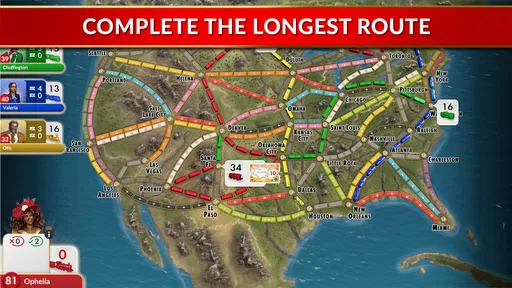
At a glance, the premise is easy to grasp: collect the right cards, claim railway links between cities, and complete tickets that reward connecting destinations. The interesting part is the pressure between those goals. A route that looks useful now may become awkward if another player takes a connection you were counting on, while chasing every ticket can leave you short of the cards needed to build. I like that the board gives me a clear long-term plan without making the next move obvious.
That balance is also why this is more than a digital board to tap through. Each turn asks me to weigh what I know against what I can risk: gather cards for a longer connection, take a route before it disappears, or work toward a different path if the map is tightening. The core idea is familiar to board-game fans, but the app makes it practical to play when setting up a physical board would be too much effort.
The Basics of Ticket to Ride®
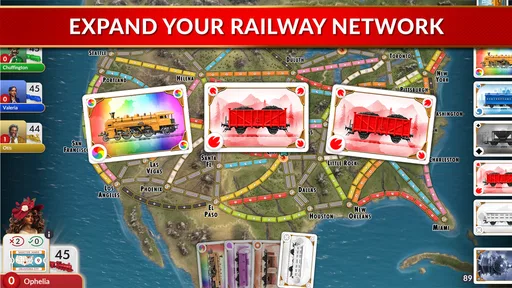
So, if you're new to Ticket to Ride®, let me break it down for you. The game is all about strategy and planning as you build train routes across a map, connecting cities and completing tickets. The app version is a faithful adaptation of the classic board game, bringing all the fun and strategy to your fingertips.
Getting Started
Downloading and setting up the game was a breeze. Within minutes, I was ready to start my first game. The interface is clean and intuitive, making it easy for both newbies and seasoned players to dive right in. The tutorial is super helpful, especially if you're not familiar with the board game version. It walks you through the basic mechanics without overwhelming you with too much information at once.
If you are learning from scratch, I’d treat the first match as practice rather than a test of skill. Pick a manageable goal, check the board before committing to a route, and notice how card gathering changes the options available on later turns. A useful habit is to pause briefly before taking a tempting link and ask whether it advances a ticket, protects a necessary connection, or simply uses cards you might need elsewhere. That small check helps keep early choices from boxing you in.
The app costs $4.99, with optional in-app purchases priced from $1.99 to $29.99 per item. I’d factor that in before downloading: the initial purchase is not the whole story if you are interested in extra content. The game is rated Everyone, and it requires Android 6.0 or later on Android devices. Its current version is 1.10.0, so it is worth checking that your device meets the system requirement before buying.
Worth Reading Before You Choose

EA SPORTS FC Mobile 26 Is a Bigger Football Game, but It Takes Time

Flipboard Shows What News Apps Must Do Beyond the Feed

Switching to Android Auto Means Rethinking Your Driving Routine

Google Calendar Makes a Crowded Week Easier to Manage

Ludo King Makes the Most of the Minutes Between Plans

Baby Panda World Brings Quick Play to Modern Phones, but Its Game Library Feels Busy
Gameplay and Features
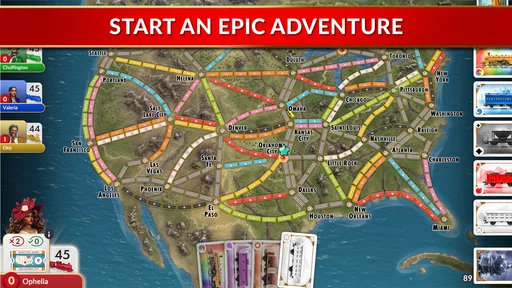
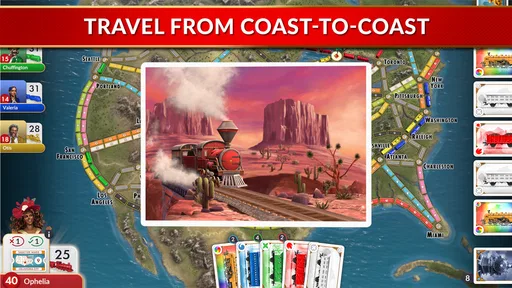
What really stands out about this app is how well it captures the essence of the original board game. The graphics are vibrant, and the animations add a nice touch without being distracting. There’s something incredibly satisfying about watching your train routes grow across the map.
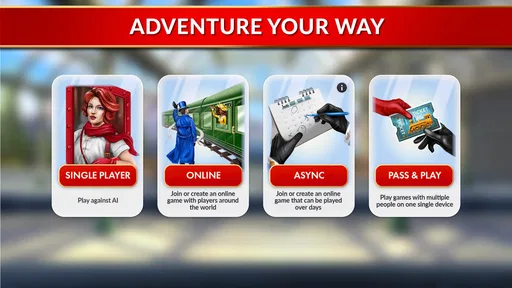
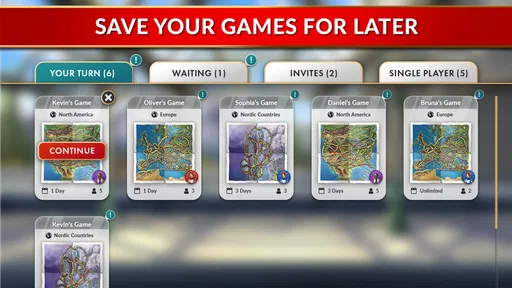
You can choose to play solo against AI opponents, which can be surprisingly challenging, or you can dive into the multiplayer mode. The multiplayer option is where the app truly shines. Whether you're playing with friends or strangers, the competitive nature of the game keeps you engaged. Plus, there's a chat feature that lets you interact with other players, adding a social element to the game.
For solo play, I find the AI useful not only as an opponent but as a low-pressure way to learn how crowded routes can change a plan. I can test whether a ticket is worth pursuing without needing to coordinate a group, then carry what I learned into a multiplayer match. Online play has a different appeal: opponents make the board feel less predictable, and a route that seemed safe may suddenly become contested. If you mainly want a quiet way to get comfortable, start against AI; if the tension of reacting to real people is the draw, choose multiplayer.
One practical multiplayer habit is to decide early which connections are essential and which are merely convenient. If a key link is taken, immediately look for a reasonable alternate path instead of spending several turns trying to rescue the first plan. That change of approach matters because the game rewards adapting to the board, not just sticking stubbornly to an opening idea. I also prefer to keep an eye on opponents’ visible progress rather than focusing only on my own tickets; it helps me recognize when waiting for a particular route is becoming a gamble.
In an ordinary evening, I could see myself starting a solo game while waiting for someone to arrive, then moving to an online match when I have time to concentrate. The solo option makes a short spare moment more useful, while multiplayer gives a longer session a social edge. I would not begin a match when I need to stop at a precise moment, though: the appeal comes from following the evolving network, and being interrupted can make it harder to keep the whole plan in mind.
Variety and Replayability
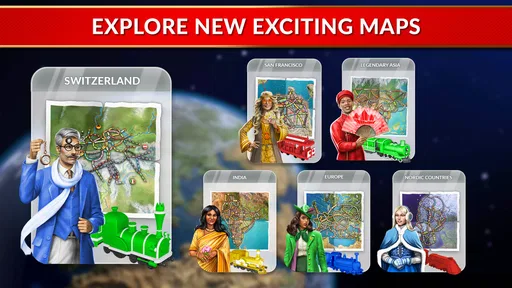
One of the things I love most about Ticket to Ride® is the variety it offers. There are multiple maps available, each with its own unique challenges and strategies. This keeps the gameplay fresh and exciting, even after multiple playthroughs. You can also purchase additional maps if you're looking to expand your horizons.
The replayability factor is high, thanks to the different strategies you can employ. Whether you're focusing on long routes or trying to complete as many tickets as possible, there's always a new way to approach each game. This keeps it from feeling repetitive, which is a huge plus in my book.
Different maps are a reason to return, but I would not assume that buying more automatically improves the experience for every player. If you are still learning the basic rhythm, getting comfortable with one map may teach you more than jumping between several. Once familiar connections stop surprising you, another map can bring back the uncertainty that makes planning interesting. I’d treat extra maps as a way to extend a game I already enjoy, not as a requirement for understanding the core appeal.
That also gives the purchase decision a simple test: do you want more situations to solve, or are you still deciding whether route-building itself is your kind of strategy? If it is the latter, spend time with the available play before considering add-ons. Players who like learning a board deeply may get more satisfaction from refining their decisions on a familiar map; players who enjoy adapting to changed layouts are more likely to value additional ones.
User Experience and Design
The app's design is sleek and user-friendly. Everything from the menu to the in-game interface has been thoughtfully crafted to enhance the user experience. The controls are intuitive, and I never found myself struggling to navigate the app, which is crucial for maintaining the flow of the game.
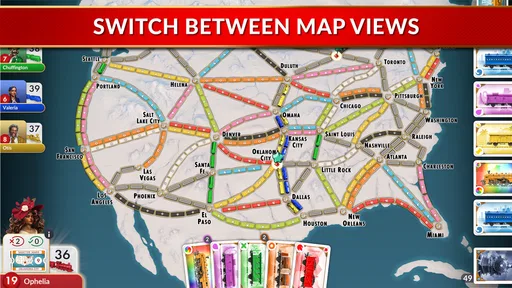
On a phone, clarity matters because route choices can involve several cities and competing links. I’d recommend taking a moment to scan the full board before acting, rather than making each turn in isolation. That is especially useful when a route is near a bottleneck: a quick visual check can reveal whether your intended connection is still available and whether another path might serve the same ticket. The convenience of touch controls does not remove the need to think ahead, but it makes those checks easy to work into a turn.
Board-game apps also differ from tabletop play in a way that is easy to overlook: the software handles the physical upkeep, but it cannot reproduce the same shared table presence. Here, the competition comes through the changing network and online opponents rather than the feel of laying pieces beside friends. If your favorite part of a board-game night is talking around a table, a physical copy is the better fit. If you want the rules and route decisions without setup or cleanup, the digital version has a real advantage.
The developers have also done a great job of updating the app regularly, ironing out any bugs and adding new features to keep players engaged. It's clear that a lot of care and attention went into creating an app that not only looks good but functions seamlessly as well.
For a sense of how established it is with players, the game has a 4.5 average from around 4,400 ratings, with more than 700 written reviews and over 50,000 installs. Those figures suggest a substantial audience for a paid board-game adaptation, though I would still judge it by whether its particular mix of planning and competition suits you. I would also keep the purchase and optional content separate in my mind: the first gets you into the game, while extra spending only makes sense if the available additions match the way you like to play.
Final Thoughts
In conclusion, Ticket to Ride® on mobile is a fantastic adaptation of a beloved board game. It's got everything you could want: strategic depth, gorgeous graphics, and a community of players to challenge. Whether you're a fan of the original or new to the game, it's absolutely worth a download. Trust me, once you start building those train routes, you won't want to stop.
My recommendation is strongest for people who enjoy planning several moves ahead but are willing to revise a plan when the board changes. It is also a sensible choice for someone who wants a board-game-style session alone against AI, rather than relying on a group being available. I’d hesitate to recommend it to anyone who wants a free game, dislikes paying separately for optional additions, or prefers quick rounds with no need to track a developing strategy. A simpler puzzle game may suit that last group better.
The original game’s accessible premise makes the app approachable, but the enjoyable part is learning when not to pursue every possible connection. I get the most out of it when I choose a clear priority, keep an alternate route in mind, and let the changing board tell me when to adjust. If that kind of thoughtful competition sounds relaxing rather than demanding, this is an easy recommendation from me; if you want a purely social tabletop atmosphere, I’d choose the physical game instead.
Pros
- Engaging gameplay with strategic depth.
- Beautifully designed maps and visuals.
- Smooth
- intuitive user interface.
- Supports both solo and multiplayer modes.
- Regular updates with new content.
Cons
- Requires internet for multiplayer games.
- Some maps require additional purchases.
- Can be challenging for beginners.
- Occasional connection issues online.
- Limited tutorial for complex strategies.
FAQs for Ticket to Ride®
What is Ticket to Ride® and how does it work?
Ticket to Ride® is a digital adaptation of the popular board game where players collect and play matching train cards to claim railway routes on a map. The objective is to complete destination tickets by connecting cities, earning points for longer routes and completed tickets while strategizing against opponents.
Is Ticket to Ride® suitable for beginners?
Yes, Ticket to Ride® is designed to be accessible for beginners with an easy-to-understand tutorial and user-friendly interface. The game offers adjustable difficulty levels, making it perfect for both newcomers and experienced players. Additionally, the in-game guide provides helpful tips to improve your strategy.
What platforms is Ticket to Ride® available on?
Ticket to Ride® is available on both Android and iOS devices, ensuring a seamless experience across smartphones and tablets. The game supports cross-platform play, allowing you to compete with friends regardless of the device they are using, and includes regular updates to enhance gameplay.
Does Ticket to Ride® require an internet connection?
While Ticket to Ride® can be played offline against AI opponents, an internet connection is required for online multiplayer mode. This enables you to compete with friends or other players globally. The game also offers a pass-and-play mode, allowing local multiplayer without an internet connection.
Are there in-app purchases in Ticket to Ride®?
Yes, Ticket to Ride® includes optional in-app purchases. These typically consist of additional maps and expansions, which offer new challenges and variations of gameplay. While the base game provides substantial content, these expansions can enhance the experience for dedicated players seeking more variety.


